

No products in the cart.

The Great JPEG Rock Heist: When a $2.8M Rock Was Just a Click Away
Ladies and gentlemen, gather ’round the digital campfire because I’ve got a tale so wild it’ll make your grandma’s rock garden look like a bargain bin. Four years ago—yes, back in the halcyon days of 2021 when crypto bros were flexing NFTs like Pokémon cards—someone dropped $2.8 million on a JPEG of a rock. Not a diamond-encrusted boulder, not a meteorite from Mars, but a cartoonish, clip-art-style lump of gray that looks like it was doodled during a boring Zoom meeting. Welcome to the saga of EtherRock #77, the most expensive pebble in history!
The Origin Story: Rocks with No Purpose
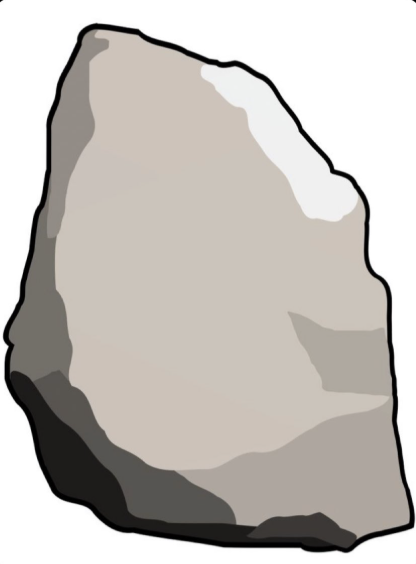
Picture this: 2017, the Ethereum blockchain is still in its awkward teenage phase, and some cheeky devs decide, “Hey, let’s mint 100 identical JPEG rocks and sell them for fun.” No utility, no secret treasure map, just pure, unadulterated absurdity. The pitch? “Pride in owning one of only 100 rocks!” It was satire so dry it could crack a desert. For years, these virtual stones sat collecting digital dust, traded for pocket change—or ignored entirely.
Fast forward to August 2021. The NFT craze was in full swing, and suddenly, these rocks were the hot new thing. Enter Justin Sun, TRON’s flamboyant founder, who kicked off the madness by snagging one for $611K, only to flip it 19 days later for a cool $2.8 million. That’s right—800 ETH at the time’s peak price turned a rock into a millionaire’s brag. Other whales piled in, with EtherRock #55 fetching $409K and the floor price soaring past $1 million. It was less “art investment” and more “I bet my rock can out-flex your Bored Ape.”
The $2.8M Click: Peak Internet Madness
Let’s pause and picture the scene. Some anonymous crypto titan, sipping a $500 whiskey, scrolls OpenSea and thinks, “You know what? That grayscale lump deserves to be mine.” For $2.8 million, they could’ve bought a real rock the size of a car—or, you know, a house. Instead, they got a file that could’ve been emailed to them for free. The transaction hit on August 27, 2021, and the internet collectively lost its mind. Memes flew faster than a slingshot, with captions like “My kid’s rock collection is worth more!” and “I’m selling my driveway for ETH!”
The rock’s “value” was pure hype-fueled FOMO. Scarcity? Check—only 100 exist. Blockchain bragging rights? Double check. But let’s be real: it’s a JPEG that looks like it was rejected from a 90s video game. If you squinted, you might see a face—or maybe that’s just the buyer’s bank account crying.
The Crash: When Gravity Hit
Spoiler alert: the bubble popped harder than a balloon at a porcupine party. By 2022, the crypto winter turned these million-dollar pebbles into bargain-bin relics, with floors dipping below $100K. A brief 2023 revival saw one sell for $209K, but as of now, mid-2025, you’re looking at $300K–$400K if you’re lucky. That’s still bonkers for a digital doodad, but it’s a far cry from the millionaire flex of yesteryear. The moral? Even rocks can’t escape a bear market.
The Punchline
So, what’s the takeaway from this geological goldmine of a story? Maybe it’s that the art market is a wild west where value is whatever you can convince someone to pay. Or maybe it’s that we’re all one NFT away from selling our souls—or at least our savings—for a pixelated pebble. Me? I’m holding out for the day someone auctions off a JPEG of a potato chip that looks like Elvis. Until then, I’ll stick to collecting real rocks—free, tangible, and way less likely to crash to zero.
Got a favorite NFT flop? Drop it in the comments—I need a good laugh! And if you’re tempted to buy EtherRock #77, just know it’s probably laughing at you from the blockchain.











Leave a Reply